

Some of my best findings paid me nothing.
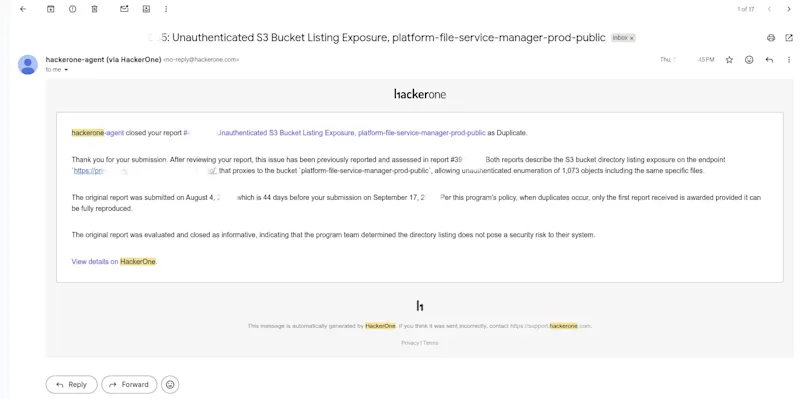
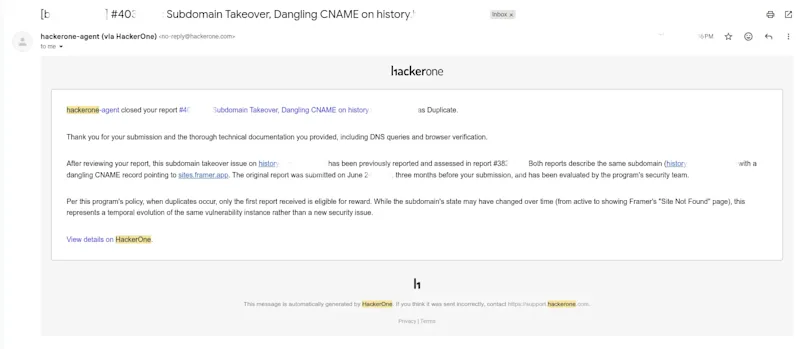
They were real vulnerabilities, valid and reproducible, the kind that deserve a bounty. Each one came back the same way: duplicate. Someone else had reported it first, sometimes days earlier, sometimes weeks. The email above is one of them. The original report was filed 44 days before mine.
I don’t lose reports like that anymore. Not because I got lucky, but because I stopped hunting like everyone else. This is the full breakdown of what changed.
Being right is not enough
When I started, I assumed rejection meant my skills were lacking. Then I looked closely at my closed reports and saw something uncomfortable. Many of them were valid and payable. The bugs were real. I was just never the first person to find them.
That changes the question. It is no longer “how do I find more bugs?” It becomes “how do I find the bugs nobody else is finding?” Plenty of talented beginners are stuck in the same loop right now, doing good work and getting duplicates, and slowly burning out.
Nothing magical happened when my results turned around. I made five specific decisions.
1. I left the crowded platforms
The biggest platforms are where everyone starts, so they are where everyone competes. Thousands of hunters point the same tools at the same targets, and anything obvious is found within hours. If you hunt there the way everyone else does, you will keep arriving second.
I moved my work to less saturated platforms, where a careful report actually gets seen first. I am not going to list them here. Knowing where to hunt is half the advantage, and it is one of the first things we hand over in our cohort.
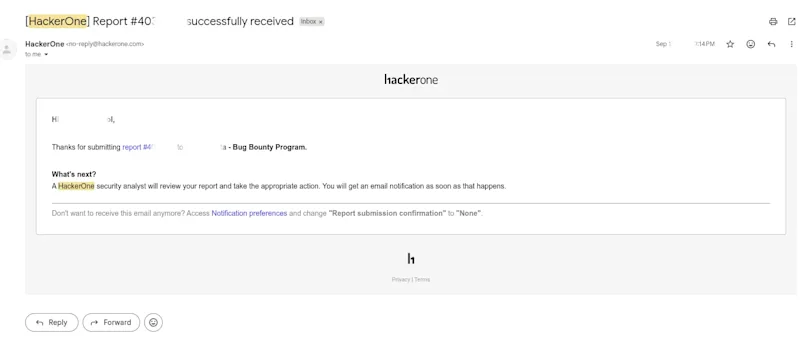
[Image: “report successfully received” email]
2. I stopped hunting what everyone hunts
That confirmation email feels great, and for most beginners it is the last good moment before the duplicate notice arrives. They submitted something a hundred other hunters had already spotted.
Common vulnerabilities are picked clean. I moved toward business logic flaws and other bug classes that most beginners walk past or have never heard of. No scanner finds these. You have to understand how an application is meant to behave, then locate the exact point where that logic breaks. Very few hunters do this work, which means very few duplicates ever land on it.
3. I rebuilt my methodology around recon
I used to open a target and start firing payloads within minutes. It felt productive, and it put me in the same race as every other hunter running the same payloads.
Now I spend most of my time on recon before I attempt a single exploit. I map the entire system: how it is built, what it connects to, how users move through it, and where the developers made assumptions. By the time I start testing, I already know where the weak points are, and they are rarely the ones everyone else checked. A hunter who understands the system will beat a hunter with a bigger payload list almost every time.
4. I learned to spot scam programs
Some programs exist on paper only. You submit a report, and then silence. Weeks pass, and nobody triages, replies, or pays.
I learned the signals that expose these programs, and I can now check them in minutes. That one skill has saved me more time than any tool I own. I stopped giving my weekends to programs that were never going to answer.
5. I learned to choose my programs like a professional
Skill matters, but so does where you aim it. Even on a good platform, some programs are swarmed while others sit nearly untouched. Before I commit a single hour, I read how active a program is, when it launched, how its scope is written, and how saturated it is likely to be.
Picking the right program changed my results more than any new tool I ever added to my workflow.
What this adds up to
Looking back, the pattern is clear. I was in the wrong place, hunting the wrong bugs, with too little understanding of the target. My skills were never the issue, my positioning was. Same hunter, different method, completely different results.
It cost me a pile of duplicates and a lot of wasted weeks to learn this. We built Bug Hunter Elite so you can skip that part.
Inside Bug Hunter Elite
Bug Hunter Elite is a live, hands-on cohort led by an active bug bounty hunter. It is built for complete beginners and intermediate hunters who are tired of duplicates and N/A reports.
Week 1:
program selection, saturation signals, scam programs, the mistakes that get hunters banned, and platform and payout setup.
Weeks 2 to 4:
one rare bug class per week. We teach it, you hunt it alone on a live program, then we hunt together so you can see your own mistakes in real time.
By the end:
a real report, reviewed by us and submitted to a live program.
You also get a 30-day plan to keep hunting after the course, our cohort Discord, and a Bug Hunter Foundations Certificate. You will work with Burp Suite, Turbo Intruder, Param Miner, ffuf, Subfinder, httpx, and Nuclei, on live targets rather than demo labs.
The cohort starts November 15 and is limited to 20 hunters. Registration closes November 13. The price is $20.
Your next valid bug should be the one that pays
Somewhere right now, another hunter is opening the target you were about to test. The only question is whether your report lands first or lands in the duplicate pile, valid, real, and worth nothing.
The platforms I use, the bug classes most hunters skip, and the signals that expose a scam program are all inside our cohort. Twenty seats, one live loop, and a report with your name on it.
Take your seat in Bug Hunter Elite before registration closes on November 13.