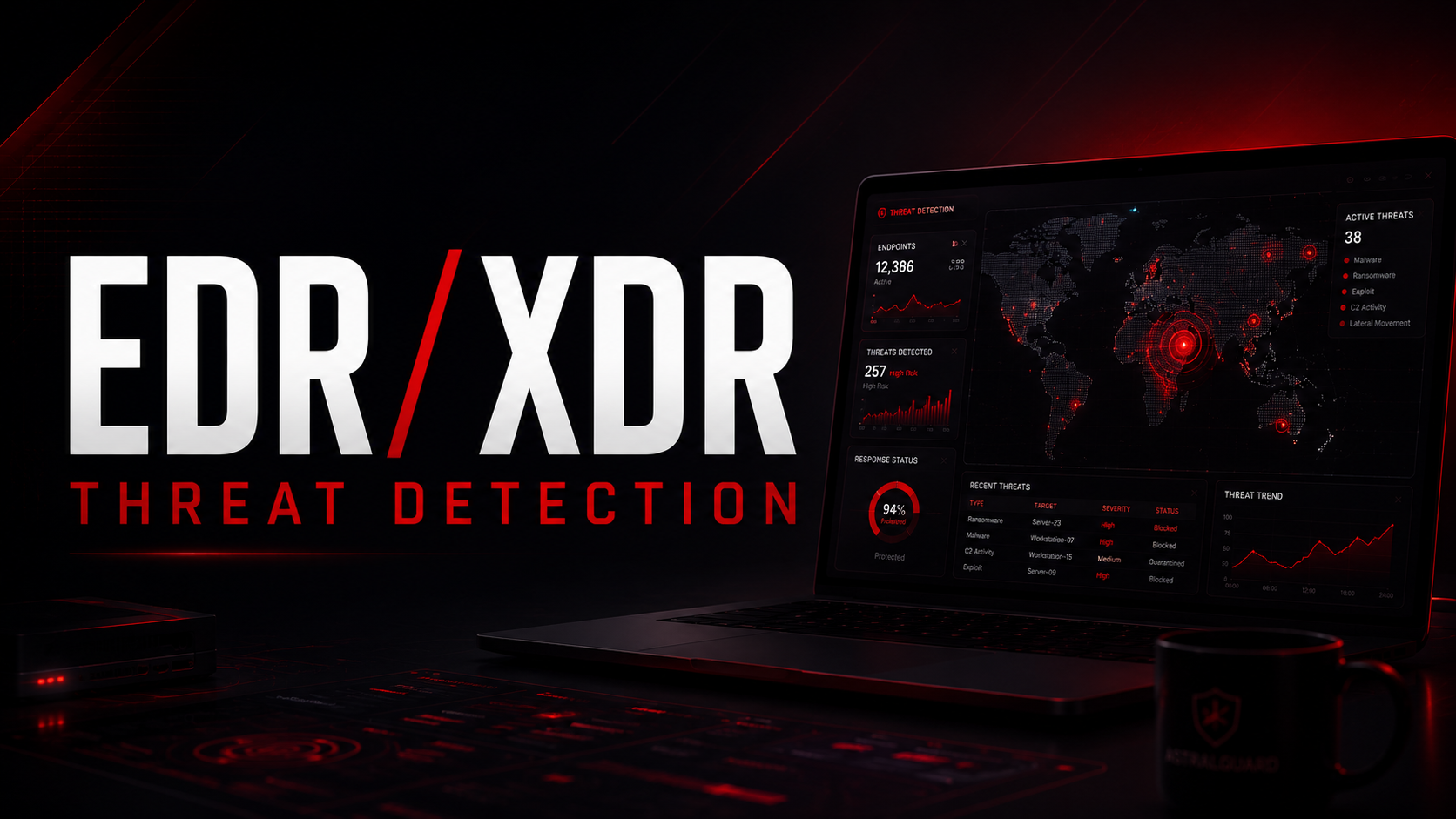
Advanced Threat Detection: EDR/XDR Operations
About this course
Learn How to Detect, Hunt and Respond to Live Attackers
The attacker is already on the endpoint. Not a simulation. Not a scan result. A live process, running quietly, waiting. Most defenders find out when it's too late. Trained analysts find out first.
This course trains you to operate real EDR and XDR platforms the way enterprise SOC teams actually use them. Detection engineering. Live threat hunting. Incident response under pressure. No theory without practice. Every technique gets tested in a live lab.
Why EDR/XDR Skills Matter Now
Endpoint detection is the frontline of every modern SOC. It's used in:
Enterprise threat detection and response
Ransomware containment
Insider threat monitoring
Security operations center workflows
Digital forensics and incident response
Red team evasion testing
Attackers are actively building tradecraft to bypass EDR. Companies are pouring budget into XDR platforms faster than they can hire people who know how to run them. If you want to work in a SOC, in detection engineering, or in incident response, this is not optional skill anymore. It's the job.
Tools You'll Master
You won't just read about these platforms. You'll operate them.
CrowdStrike Falcon
Microsoft Defender for Endpoint
Velociraptor
LimaCharlie
Wazuh
MITRE ATT&CK Navigator
You'll learn how to configure them, tune them, hunt inside them, and correlate signals across all of them like a real detection engineer.
What You'll Be Able To Do
By the end of this course, you'll confidently:
- 1
Configure and tune EDR agents to reduce noise and catch real threats.
- 2
Write detection rules mapped to MITRE ATT&CK tactics and techniques.
- 3
Hunt for attacker behavior instead of waiting on alerts to fire Investigate live endpoint activity and isolate compromised systems.
- 4
Use Velociraptor for forensic triage at scale Build real time detection pipelines with LimaCharlie.
- 5
Understand the evasion techniques attackers use against EDR, so you know exactly what you're defending against
Most importantly, you'll think like a detection engineer, not just an alert reader.
Learning Mode
This is hands-on from start to finish. You'll get:
Guided labs inside real EDR and XDR platforms
Live simulated attacker activity to detect and respond to.
A structured capstone incident response simulation.
A shareable certificate Cohort Discord support
Career paths where EDR/XDR is a core or highly valuable skill
SOC Analyst (Tier 1 to Tier 3)
Detection Engineer
Threat Hunter
Incident Responder
DFIR Analyst
Security Engineer Red Teamer Uses EDR knowledge to understand and evade defensive tooling.
Who This Course Is For
SOC analysts ready to move beyond alert triage
Sysadmins moving into security operations
OSINT and foundational security graduates leveling up
Aspiring detection engineers and threat hunters
Anyone serious about defending live environments, not just studying theory
Already have OSINT fundamentals? This is your next step.
Requirements
What you need before you start
Basic networking fundamentals
Basic Windows and Linux administration
Understanding of common processes and system behavior
Helpful but optional:
OSINT course or equivalent investigative experience
Prior SOC or IT security exposure
Course Curriculum
What you'll cover
WEEK | MODULE |
|---|---|
WEEK1 | EDR/XDR Foundations and Architecture |
WEEK2 | Detection Engineering and MITRE ATT&CK Mapping |
WEEK3 | Live Response and Threat Hunting |
WEEK4 | Enterprise EDR Operations (CrowdStrike Falcon) |
WEEK5 | Final Exam - Capstone Incident Response Simulation |